


Do you think creating a page on social media and posting randomly makes a successful strategy? I know many business owners think this way. They believe, “Social media is free, just post anything and customers will come.” But the truth is – without knowing how to create a social media strategy, just posting will waste both time and money.
According to recent studies, over 70% of small businesses use social media, but more than half fail to see results because they don’t follow a proper strategy.
Last week a restaurant owner came to us. He said frustratedly, “Sir, I’ve been posting on Facebook for 8 months but no customers are coming. Social media doesn’t work.” I looked at his page – sometimes food photos, sometimes motivational quotes, sometimes personal family photos. No clear goals, no audience targeting, no planning.
This is the reality. Most businesses don’t know how to create a social media strategy that actually works. In this blog, I’ll teach you step by step how to build a winning strategy that delivers real results.
First Understand – What is Social Media Strategy Actually?
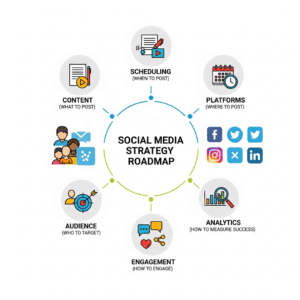
Before learning how to create a social media strategy, you need to understand what it actually is. A social media strategy is your complete roadmap –
- What you’ll post
- When and where you’ll post
- Who your target audience
- How you’ll engage your audience,
- How you’ll measure success.
It’s not just creating a content calendar. It’s the process of aligning your social media activities with your business goals. If you don’t know how to create a social media strategy properly, you’re basically driving blindfolded.
When you have a social media strategy, you’ll know:
- Who your target customers are and where they’re active
- What type of content they prefer
- What time to post for maximum engagement
- How to differentiate from competition
- What metrics to track for measuring success
Step 1: Set Clear Goals – Foundation of Strategy
The first step in how to create a social media strategy is defining crystal clear goals. What exactly do you want from social media?
Most business owners make this mistake – they say “I want to increase brand awareness.” But this is a vague goal. How will you measure brand awareness? How much increase will you consider successful?
Instead, set specific goals:
- “In the next 6 months, I’ll grow Instagram followers from 1500 to 8000”
- “I’ll bring 500+ monthly website visitors from social media”
- “I’ll generate 25 qualified leads monthly”
- “I’ll increase social media engagement rate by 15%”
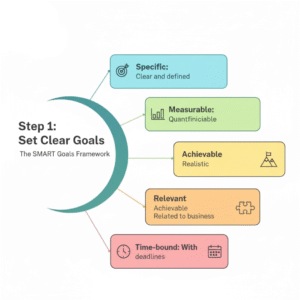
At XDORADO, we conduct goal-setting sessions with clients. We understand their business objectives, then set realistic social media goals. Remember, when learning how to create a social media strategy, follow the SMART goals framework:
- Specific – Clear and defined
- Measurable – Quantifiable
- Achievable – Realistic
- Relevant – Related to business
- Time-bound – With deadlines
Step 2: Know Your Target Audience
When you learn how to create a social media strategy, target audience research is the most important part. Who are your customers? Just saying “18-35 age group” isn’t enough. You need deep understanding.
We had one client who was a cosmetics brand. Initially they said, “Our target audience is young girls who like makeup.” But after research, we discovered their actual customers were working women (25-40) who want quick, professional makeup routines.
Include in target audience research:
Demographics:
- Age range and gender
- Location and income level
- Education and profession
- Family status
Psychographics:
- Interests and hobbies
- Values and beliefs
- Social media usage patterns
- Content preferences
- Shopping behaviors
Digital Behavior:
- Which platforms they use most
- What time they’re active
- What type of content they engage with
- What devices they use
Without this research, how to create a social media strategy won’t be effective. You’ll target the wrong audience.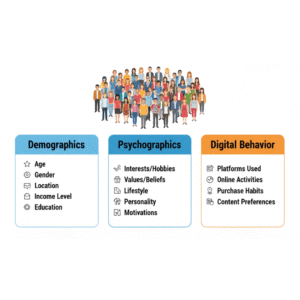
Step 3: Platform Selection – Focus on the Right Places
The biggest mistake when learning how to create a social media strategy is trying to be on all platforms. Better approach is strong presence on 2-3 platforms than weak presence on 7-8 platforms.
Facebook:
- 30+ age group dominant
- Great for local businesses
- Excellent community building
- Detailed targeting options
Instagram:
- Visual content focused
- 18-35 age group active
- Stories feature very engaging
- Shopping features available
LinkedIn:
- Professional networking
- Perfect for B2B marketing
- Industry expertise showcase
- Effective lead generation
YouTube:
- Educational content works best
- Long-form videos preferred
- Massive SEO benefits
- All age groups present
Choose platforms based on your target audience research. To know how to create a social media strategy, you must understand that every platform has different audience behavior.
Step 4: Content Strategy and Content Pillars
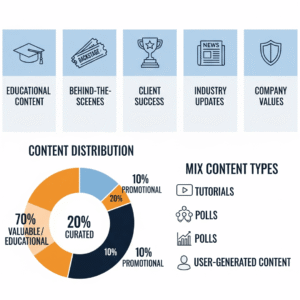
The heart of how to create a social media strategy is content planning. Random content posting confuses audiences. Define content pillars – 3-5 main themes around which all content will revolve.
Example content pillars for digital marketing agency:
- Educational Content – Marketing tips, tutorials
- Behind-the-Scenes – Team culture, work process
- Client Success – Case studies, testimonials
- Industry Updates – Latest trends, news
- Company Values – Mission, vision, community work
Follow content distribution:
- 70% valuable, educational content
- 20% curated content from others
- 10% promotional content
Mix content types:
- Educational posts and tutorials
- Behind-the-scenes content
- User-generated content
- Interactive polls and questions
- Success stories and case studies
- Industry news and trends
To make how to create a social media strategy effective, definitely create a content calendar. Plan monthly what content to post when.
Step 5: Visual Identity and Brand Consistency
When you implement how to create a social media strategy, maintaining visual consistency is crucial. Your brand colors, fonts, photo styles – everything needs to be consistent.
Visual brand guidelines include:
- Color palette (primary and secondary colors)
- Typography choices
- Logo usage guidelines
- Photography style
- Graphic elements
- Template designs
Also define brand voice. Your brand personality:
- Professional or casual?
- Formal or conversational?
- Serious or playful?
XDORADO’s brand voice is conversational but expert. We explain complex marketing topics in simple language but maintain authority.
Step 6: Content Calendar and Posting Schedule
After learning how to create a social media strategy, content calendar is crucial in the execution phase. Consistency is key for social media success.
Include in content calendar:
- Post date and exact time
- Platform specification
- Content type (photo, video, carousel)
- Caption with hashtags
- Visual elements needed
- Call-to-action
- Responsible team member
Posting frequency by platform:
- Facebook: 1-2 posts daily
- Instagram: 1 post + 2-3 stories daily
- LinkedIn: 3-5 posts weekly
But remember, quality always beats quantity. Better 3 high-quality posts weekly than 7 poor-quality posts.
Step 7: Community Management and Engagement
To complete how to create a social media strategy, community management is essential. Social media isn’t just broadcasting – it’s a conversation platform.
Community management includes:
- Quick response to comments
- Engaging with followers’ content
- Monitoring brand mentions
- Customer service through DM
- Professional handling of complaints
- Building relationships with influencers
Response time expectations:
- Facebook: 24 hours max
- Instagram: 1-2 hours
- Twitter: 1 hour
- LinkedIn: 24-48 hours
You need strategy for handling negative comments. Professional response publicly, then detailed discussion privately.
Step 8: Paid Advertising Strategy
To complete how to create a social media strategy, you need to blend paid promotion with organic content. Social media advertising provides precise targeting advantages.
Paid strategy elements:
- Target audience segmentation
- Ad creative variations
- Budget allocation per platform
- Campaign objectives (awareness, traffic, conversions)
- A/B testing different approaches
- Performance monitoring and optimization
Start small, test different approaches, then scale successful campaigns.
Step 9: Influencer Partnerships
Influencer marketing plays an important role in how to create a social media strategy. Choosing the right influencers is crucial.
Influencer categories:
- Nano influencers (1K-10K): High engagement, budget-friendly
- Micro influencers (10K-100K): Good reach, affordable
- Macro influencers (100K-1M): Broader reach, moderate cost
- Mega influencers (1M+): Massive reach, expensive
For local businesses, micro and nano influencers are more effective. They have more authentic engagement.
Step 10: Analytics and Performance Monitoring
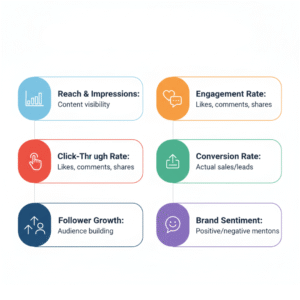
When you learn how to create a social media strategy, measurement strategy is equally important. Define Key Performance Indicators (KPIs).
Track important metrics:
- Reach and Impressions – content visibility
- Engagement Rate – likes, comments, shares
- Click-through Rate – website traffic
- Conversion Rate – actual sales/leads
- Follower Growth – audience building
- Brand Sentiment – positive/negative mentions
Tools for tracking:
- Native platform analytics
- Google Analytics for website traffic
- Social media management tools
- Third-party analytics platforms
Review performance monthly and adjust strategy based on data.
Avoid Common Mistakes
When learning how to create a social media strategy, avoid these mistakes:
- Posting without strategy – Random content gives poor results
- Starting on all platforms simultaneously – Focus gets diluted
- Only promotional content – Audience gets bored
- Inconsistent posting – Algorithm penalizes
- Not engaging with audience – One-way communication fails
- Blindly copying competitors – Authenticity lost
- Focusing only on vanity metrics – Real ROI ignored
- No patience – Results take time
XDORADO’s Strategy Development Approach
At XDORADO, we develop comprehensive social media strategies for clients. Our proven process:
- Week 1-2: Deep research – audience analysis, competitor study, current performance audit
- Week 3-4: Strategy framework – goals, platforms, content pillars
- Week 5-6: Content creation and calendar development
- Week 7-8: Implementation and team training
- Week 9-12: Monitoring, optimization, performance reporting
Our focus is sustainable, long-term growth. We don’t promise overnight viral success – we deliver consistent, measurable results.

Industry-Specific Strategy Considerations
How to create a social media strategy depends on your industry:
Restaurant/Food Business:
- Visual content highly important
- Instagram and Facebook focus
- Encourage user-generated content
- Local hashtags and location tagging
- Professional quality food photography
Professional Services:
- LinkedIn primary platform
- Educational content focus
- Thought leadership establishment
- Highlight client testimonials
- Share industry insights
E-commerce:
- Product showcase priority
- Utilize shopping features
- Influencer partnerships
- Highlight user reviews
- Seasonal campaigns
B2B Services:
- LinkedIn and Facebook focus
- Educational content strategy
- Prominent case studies
- Industry networking
- Lead generation focus
Local Services:
- Google My Business integration
- Local community engagement
- Customer reviews management
- Location-based content
- Community events participation
Advanced Strategy Elements
To take how to create a social media strategy to advanced level, consider these elements:
User-Generated Content Strategy:
- Encourage customer content
- Create branded hashtags
- Run contests and campaigns
- Feature customers regularly
- Highlight reviews and testimonials
Social Listening:
- Monitor brand mentions
- Track industry conversations
- Analyze customer feedback
- Watch competitor activities
- Early trend identification
Crisis Management:
- Negative feedback response protocol
- PR crisis communication plan
- Team roles and responsibilities
- Escalation procedures
- Recovery strategies
Integration with Overall Marketing:
- Email marketing coordination
- Website content sync
- SEO strategy alignment
- Traditional marketing integration
- Sales team collaboration
Final Thoughts and Action Steps
Learning how to create a social media strategy is a continuous process. Social media landscape is constantly evolving – new features, algorithm changes, user behavior shifts. Successful strategy must be flexible and adaptable.
Remember these key takeaways:
- Don’t start without clear goals
- Deep audience research is foundation of success
- Quality content is more important than quantity
- Consistency is absolutely crucial
- Engagement isn’t one-way broadcasting
- Data-driven decisions are better than gut feeling
- Patience – results take time
- Continuous learning – stay updated
Social media success doesn’t come overnight. But knowing how to create a social media strategy properly, giving consistent effort, and maintaining strategic approach will definitely get you results.
Remember, the definition of success in social media marketing is different for different businesses. For some it’s brand awareness, for others direct sales, and for others customer engagement. Develop strategy aligned with your business goals.
Need customized social media strategy for your business? XDORADO’s expert team can help you. We don’t just give theory – we implement practical, result-oriented strategies that deliver actual business growth.
Start your journey of how to create a social media strategy today. Harness the power of social media for your business with right planning, consistent execution, and strategic approach.
Frequently Asked Questions (FAQs)
Q1: How long does it take to see results when learning how to create a social media strategy?
A1- Results typically start showing within 3-6 months of consistent implementation. Some metrics like engagement can improve within 4-6 weeks, but patience and consistency are key for long-term success.
Q2: Do I need to be on all social media platforms when I create a social media strategy?
A2- No. It’s better to excel on 2-3 platforms than be mediocre on many. When you learn how to create a social media strategy, focus on platforms where your target audience is most active.
Q3: How much should I budget for social media when implementing how to create a social media strategy?
A3- Small businesses can start with $200-700 monthly, medium businesses $500-1500. Start small, test what works, then scale successful campaigns based on results.
Q4: Can I implement how to create a social media strategy without hiring an agency?
A4- Yes, you can start basic strategy yourself. However, professional expertise becomes valuable as you grow, especially for complex areas like paid advertising and detailed analytics.
Q5: What’s the most important element when learning how to create a social media strategy?
A5- Understanding your target audience is the foundation. Without knowing who you’re talking to, even great content will fail. Research their demographics, preferences, and behavior patterns first.


